Beyond the “Slop”: Why Home Crafters Still Need AI to Survive
The internet is drowning in AI slop — but in spare bedrooms and garages, honest makers are using the same generative models to keep their small businesses afloat. Here's where AI genuinely fits in a real craft workflow, and why it isn't cheating.
Every maker scrolling social feeds or Etsy has felt the fatigue. The internet is currently drowning in "AI slop" — plastic-sheened, soulless, six-fingered digital images churned out by dropshippers looking for a quick buck.
It's easy to look at that flood of low-effort junk and declare generative AI the enemy of genuine craft.
Yet inside spare bedrooms, garages, and kitchen tables across the country, honest makers are quietly using these same generative models to keep their small businesses afloat. And they aren't doing it to cut corners — they're doing it because reality leaves them very little choice.
The Reality: You're an Engineer Before You're an Artist
The dirty secret of modern crafting is that consumer hardware has exploded in complexity.
Ten years ago, home crafting meant glue guns and scrapbook scissors. Today, a typical weekend market vendor manages a diode laser cutter, a vinyl plotter, a sublimation printer, or a 3D printer.
Each machine comes with a brutal, non-negotiable learning curve:
- Laser cutters demand an understanding of focal lengths, air assist, kerf offset, and burn speeds across five different types of plywood.
- Sublimation rigs require dialed-in heat-press temperatures, dwell times, and ICC color management profiles.
- Vinyl plotters demand knife-depth calibrations, weeding discipline, and transfer-tape tack management.
Makers are already spending 80% of their bandwidth acting as machine operators, quality control technicians, packaging departments, and customer service reps. Expecting a solo maker to also invest two years mastering Adobe Illustrator's pen tool and bezier curves just to sell personalized camp mugs isn't realistic — especially on a bootstrap budget where $50/month software subscriptions hurt.
Where AI Actually Fits: The Digital Rough Draft
The difference between "AI slop" and legitimate maker tooling comes down to whether the output is the product or merely the starting material.
For a spam account, an AI image is slapped on a mock-up and pushed out as a finished print-on-demand listing. For a maker, an AI prompt is just the fastest way to get a raw concept out of their head and into a machine-readable vector.
Smart creators are using generation tools for three very specific jobs:
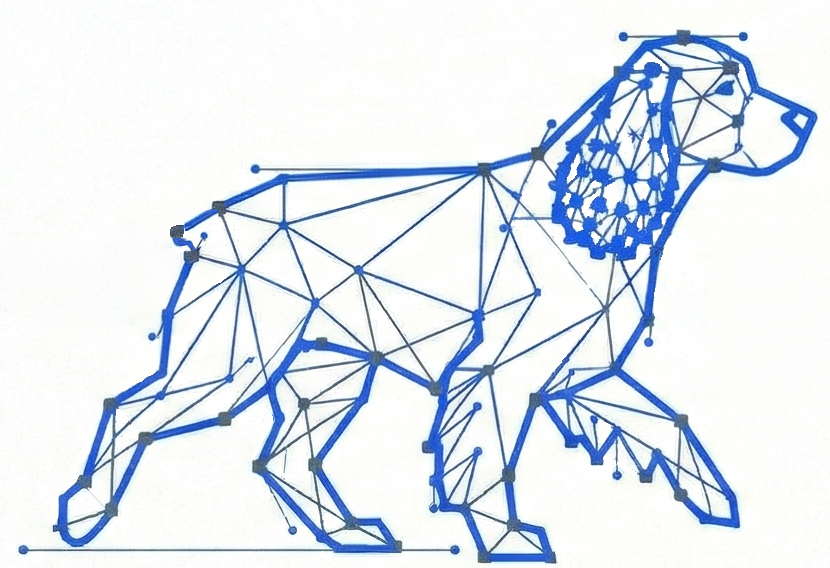
- Clean silhouette and vector foundations — generating high-contrast black-and-white silhouettes (e.g.,
minimalist line-art highland cow, vector style, white background) that can be quickly autotraced into clean cut-lines for laser engraving or vinyl cutting. - Sublimation backdrops — generating stylized watercolor splatters, vintage floral textures, or themed textures that serve as backdrops for custom customer names and dates.
- Overcoming the "blank canvas" tax — showing a client three AI-generated variations of an idea in two minutes to lock in a custom order direction before ever turning on a machine.
The Maker's Unfair Advantage
The public backlash against AI isn't directed at digital tools; it's directed at laziness. People resent paying for things that cost zero human effort to make.
That is why makers will win. You cannot 3D-print a vibe, and you cannot prompt a laser to properly sand 1/8-inch Baltic birch, apply a clean walnut stain, or weed intricate heat-transfer vinyl without tearing.
The value of handmade goods has never been about who drew every line of a cut file from scratch. It lives in the weight of the ceramic mug, the crisp edge of the acrylic cut, the smell of charred cedar, and the fact that a real person inspected the seams before packing the box.
AI slop exists only on screens. The moment a tool helps a small-scale artisan turn raw materials into something tactile and durable, it stops being slop and starts being craft.
Ready to try it yourself?
Start creating professional AI designs in minutes — no experience required.
Get Started Free